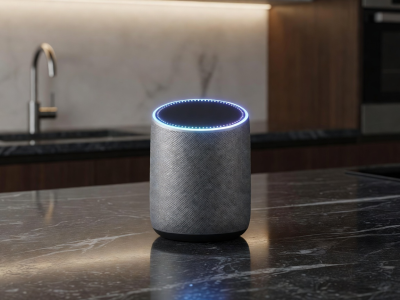
The Fragmented Ecosystem Challenge
A persistent frustration for consumers adopting smart home technology has been ecosystem fragmentation. Purchasing a lightbulb that only works with one brand's app, and a thermostat that requires another, leads to digital clutter rather than cohesive automation. To unify these disparate devices, a centralized architecture consisting of a primary interface (Voice Assistant) and an execution engine (Smart Hub) is required.
Voice Assistants: The Conversational Interface
The consumer-facing layer of most smart homes relies heavily on ambient voice computing. Devices utilizing natural language processing allow users to bypass mobile applications entirely. Instead of navigating menus, a user simply speaks an intent.
When selecting an ecosystem, consumers must evaluate the primary tech footprint already established in their lives.
- Ecosystems built around mobile operating systems often integrate deeply with native smartphone features, calendars, and messaging platforms.
- Retail-driven ecosystems tend to boast the widest third-party device compatibility and prioritize frictionless commerce integrations.
A growing consideration in this space is microphone privacy. Modern smart speakers employ physical microphone disconnect switches, severing electrical power to the listening hardware to guarantee absolute privacy during sensitive conversations.
Smart Hubs and Local Processing
While voice assistants handle the interface, the smart hub handles the execution. Historically, giving a command to a smart speaker resulted in the audio being sent to a remote cloud server, translated to code, sent to the bulb manufacturer's cloud server, and finally beamed back down to the bulb in the living room. This cloud dependency introduces latency and renders the smart home completely inoperable during internet outages.
The industry is aggressively shifting toward local execution. Modern hubs contain sophisticated onboard processors capable of translating logic locally. When an automation routine dictates that "Motion on the porch turns on the entryway light," a locally processing hub executes this instantly, entirely bypassing external cloud servers. This reduces latency to milliseconds and vastly improves network security.
The Impact of Matter and Thread
For years, consumers had to meticulously check packaging for "Works with..." badges. The introduction of the Matter protocol represents a collaborative industry effort to end this walled-garden approach. Matter is an open-source interoperability standard. If a device is Matter-certified, it is guaranteed to work seamlessly across all major smart home ecosystems.
Underpinning Matter is often the Thread network protocol. Thread creates a self-healing, low-latency mesh network dedicated exclusively to smart home devices. Unlike Wi-Fi, which degrades as more devices are added, a Thread network becomes more resilient and expansive with every mains-powered device installed. This paradigm shift means hubs are transitioning from proprietary translators into localized Thread Border Routers, ultimately democratizing device selection for the consumer.