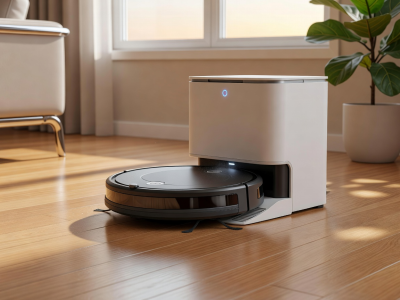
The Shift to True Autonomy
Early iterations of robotic vacuums were more akin to electronic sweepers than true cleaning appliances. They relied on random "bump and turn" algorithms, frequently missed entire sections of a room, and required daily human intervention to empty tiny dustbins. Today, automated cleaning devices have matured into highly sophisticated navigational machines capable of mapping floorplans and maintaining themselves for weeks at a time.
Navigation Technologies: VSLAM vs. LiDAR
The efficacy of a robotic cleaner is heavily dependent on how it understands its environment.
VSLAM (Visual Simultaneous Localization and Mapping)
Units utilizing VSLAM depend on an optical camera pointed toward the ceiling to track physical landmarks (doorframes, ceiling fans) and calculate position. While generally effective and enabling a lower profile design to fit under tight furniture, optical cameras require ambient lighting to function properly. A VSLAM vacuum may struggle to map a dark room or operate effectively at night.
LiDAR (Light Detection and Ranging)
LiDAR-equipped machines utilize a spinning laser turret—usually housed in a small dome on top of the unit—to scan the room hundreds of times per second. This generates a highly accurate, persistent digital map of the floorplan. LiDAR functions perfectly in pitch darkness and prevents the machine from physically colliding with baseboards and furniture. The trade-off is a slightly taller machine height, which may limit clearance under specific couches.
Obstacle Avoidance Systems
Even with perfect mapping, floor layouts change dynamically. Dropped clothing, pet waste, or charging cables present severe hazards to the motorized brush rollers. Premium cleaning devices employ front-facing AI cameras or structured light sensors to recognize temporary obstacles. Upon detection, the machine maneuvers around the hazard and notes the location on the digital map for the user to review.
The Self-Emptying Revolution
The most significant leap in convenience has been the widespread adoption of auto-empty base stations. Rather than manually dumping a small onboard bin after every cycle, the robot docks itself and a high-powered secondary vacuum extracts the debris into a larger, sealed bag within the base station. This process reduces human maintenance from daily bin emptying to simply replacing a sealed bag every one to two months, vastly reducing dust exposure for allergy sufferers.
Hybrid Mopping Advancements
As hard floors become increasingly popular, the demand for combination vacuum/mop devices has surged. Basic models simply drag a static wet microfiber cloth across the floor, which is often insufficient for dried spills. Advanced models address this through two distinct approaches:
- Sonic Vibration: The mop pad vibrates thousands of times per minute to scrub stains mechanically.
- Spinning Pads: Dual rotating discs apply downward pressure to lift grime from the surface.
Crucially, to protect carpets, high-end hybrids feature an auto-lift mechanism. When an ultrasonic sensor detects carpet, the mopping mechanism is physically elevated, allowing the unit to vacuum the rug without transferring moisture.